Blog · Rules · Competition
Jiu-jitsu scoring: how many points each position is worth under IBJJF rules
Takedown, sweep, guard pass, knee on belly, mount and back: the IBJJF point table explained, with advantages and penalties.
Understanding the scoring changes the way you train. Under IBJJF rules, the federation behind the biggest gi tournaments, each control position scores points as long as it is stabilized for 3 seconds.
The point table
| Position | Points |
|---|---|
| Takedown (taking him down and stabilizing on top) | 2 |
| Sweep (from bottom guard to top) | 2 |
| Knee on belly | 2 |
| Guard pass | 3 |
| Mount | 4 |
| Back control (with hooks) | 4 |
Advantages
When an athlete almost completes a scoring position, or gets close to a submission, the referee can award an advantage. If points are tied, the athlete with more advantages wins.
Penalties
Stalling, fleeing the mat area and other infractions lead to penalties. Penalties also break ties and, when accumulated, can give points to the opponent or cause disqualification.
Why it matters in training
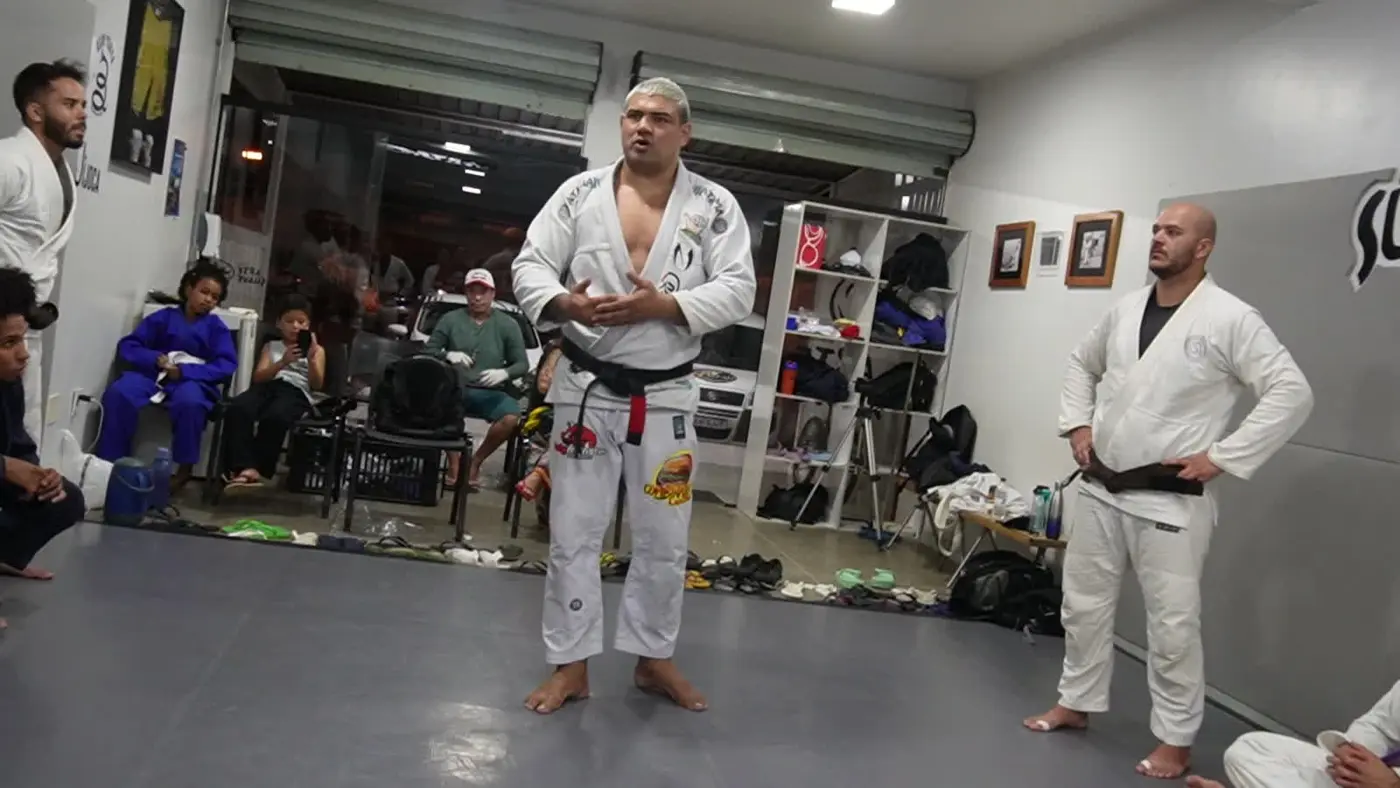
That's why so many coaches insist on control: the point only exists if the position is held. As Braga Neto says, if you got to side control and your opponent recovered guard, it wasn't his defense, it was a failure in your control.
Rules change over time. Before competing, check the current rule book on the IBJJF website.