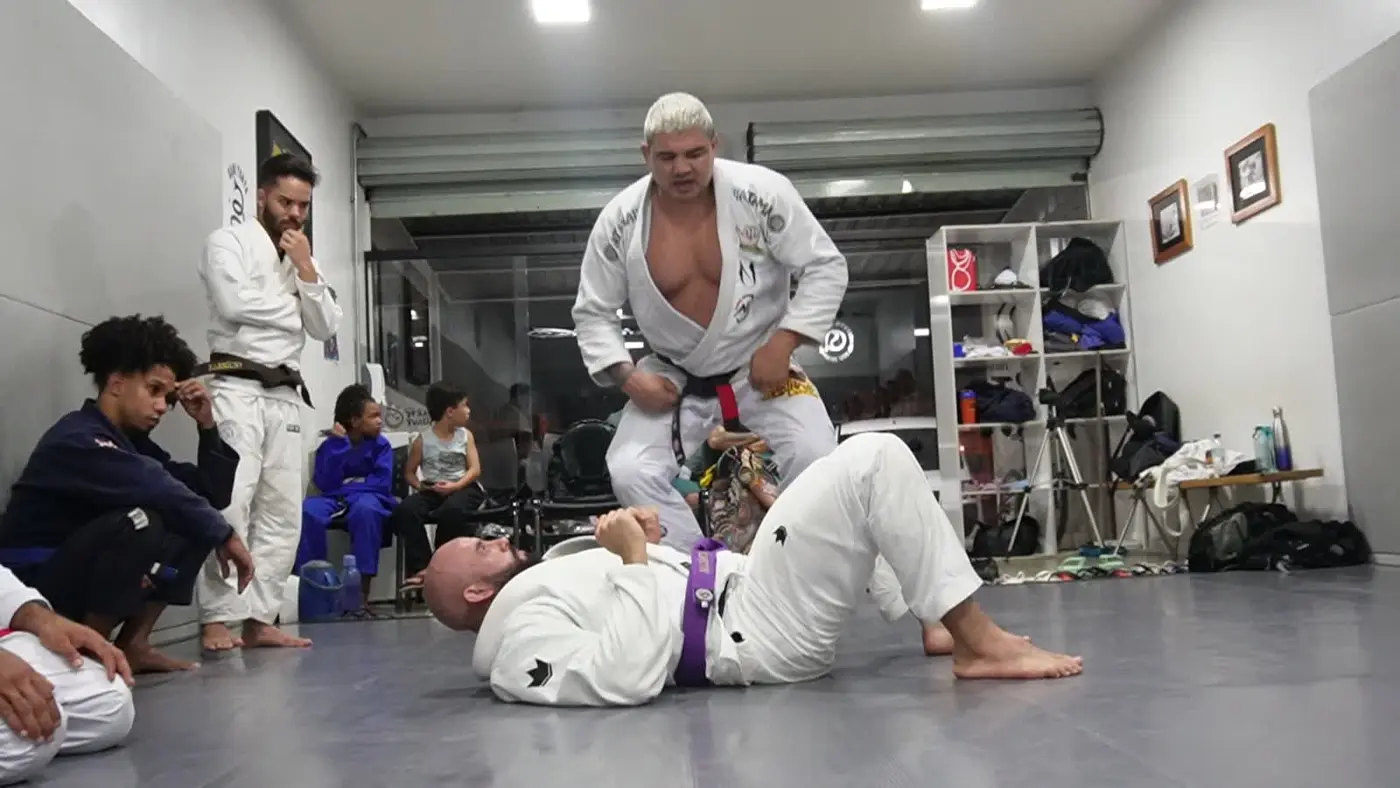
Blog · Belts · Beginners
Jiu-jitsu belts: color order, ages and minimum time for each rank
White, blue, purple, brown and black: the order of adult and kids belts and the minimum time required by the IBJJF between each one.

The belt is one of the most respected traditions in jiu-jitsu. It shows not only training time, but technique, behavior and your coach's assessment. Here is how the IBJJF ranking system works.
Adult belts (16 and older)
| Belt | Minimum age | Minimum time before the next |
|---|---|---|
| White | none | set by the coach |
| Blue | 16 | 2 years |
| Purple | 16 | 1.5 years |
| Brown | 18 | 1 year |
| Black | 19 | degrees every 3 years |
After black come the coral belts (red and black, then red and white) and the red belt, reserved for those who dedicated decades to the art.
Kids belts (4 to 15)
Grey, yellow, orange and green, each with variations (white stripe, solid and black stripe). At 16, the athlete moves to the adult system.
Minimum time is not real time
The numbers above are the federation's minimum. In practice most people take much longer, and that's fine: in jiu-jitsu, the coach gives the belt when the student is ready. Braga Neto started at 4 and decided to become a fighter at 12. Patience is part of the path.
Check the current ranking system on the IBJJF website.
Read next
We visited Fernando Pinduka's gym: jiu-jitsu explained through anatomy
Base, posture and control: the 3 fundamentals to open the closed guard
Jiu-jitsu scoring: how many points each position is worth under IBJJF rules